
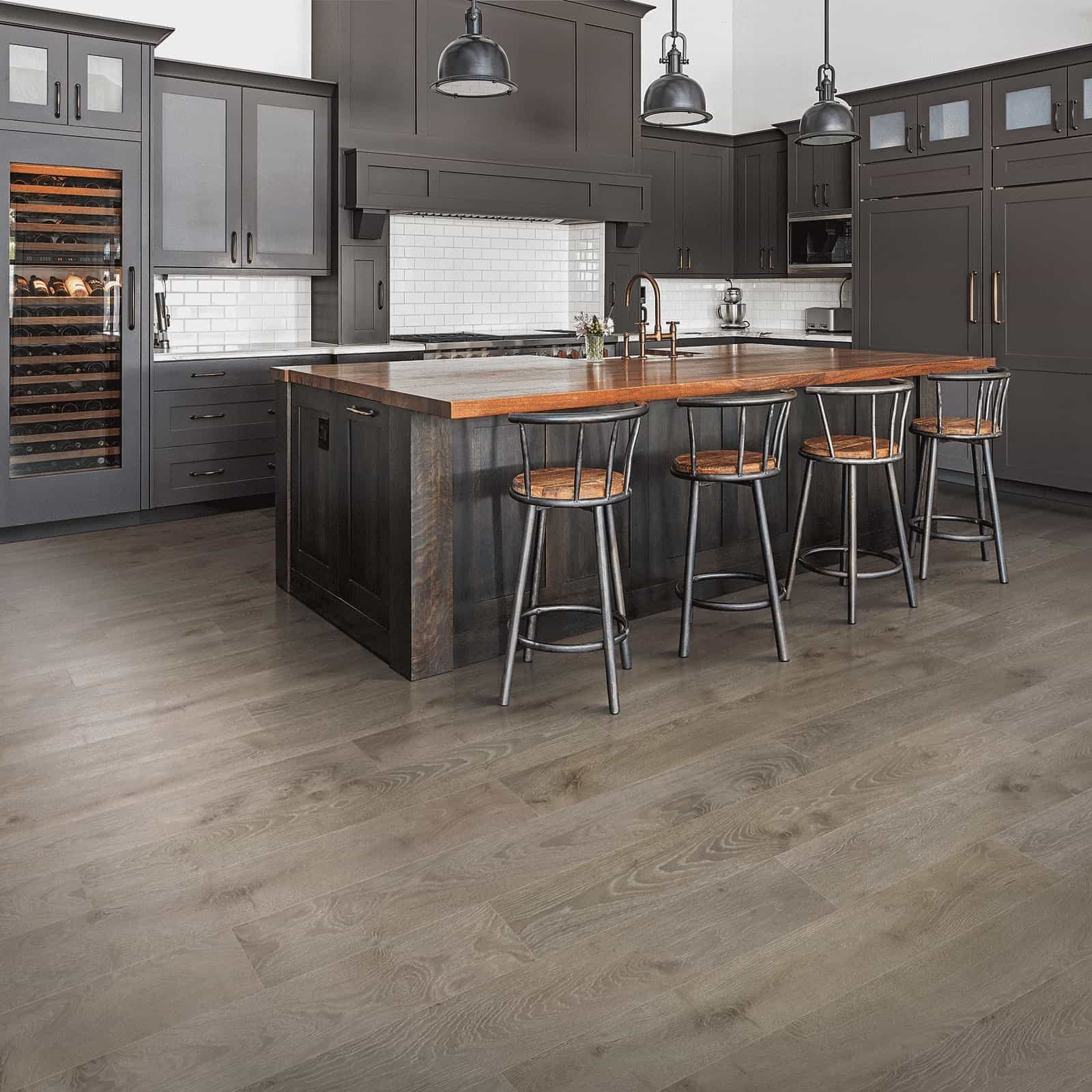
Posted on 08.14.2025
Choosing the best flooring for kitchen spaces in 2025 means balancing looks, durability, and practicality. With heavy foot traffic, spills, humidity, and the need for easy cleaning, your kitchen floor must do more than just look good. Whether you’re planning a remodel or updating your home for resale, selecting the right surface can make all the difference. In this guide, Raleigh Flooring experts walk you through top flooring types—including tile, vinyl, and hardwood—highlighting strengths, trade-offs, and how to choose the right material for your kitchen and lifestyle.
What Makes the Best Floor for a Kitchen?
Before selecting materials, understand what defines the best floor for kitchen environments:
- Water Resistance: Kitchens are exposed to moisture from sinks, dishwashers, and cleaning.
- Durability Under Traffic: Frequent movement from family and pets requires strong flooring.
- Slip Resistance: Non-slip surfaces improve safety in busy cooking areas.
- Ease of Cleaning & Maintenance: Low-maintenance floors save time and money.
- Aesthetic Fit & Longevity: Choose a design that complements your home and lasts for years.
Tile Flooring — The Most Durable Kitchen Option
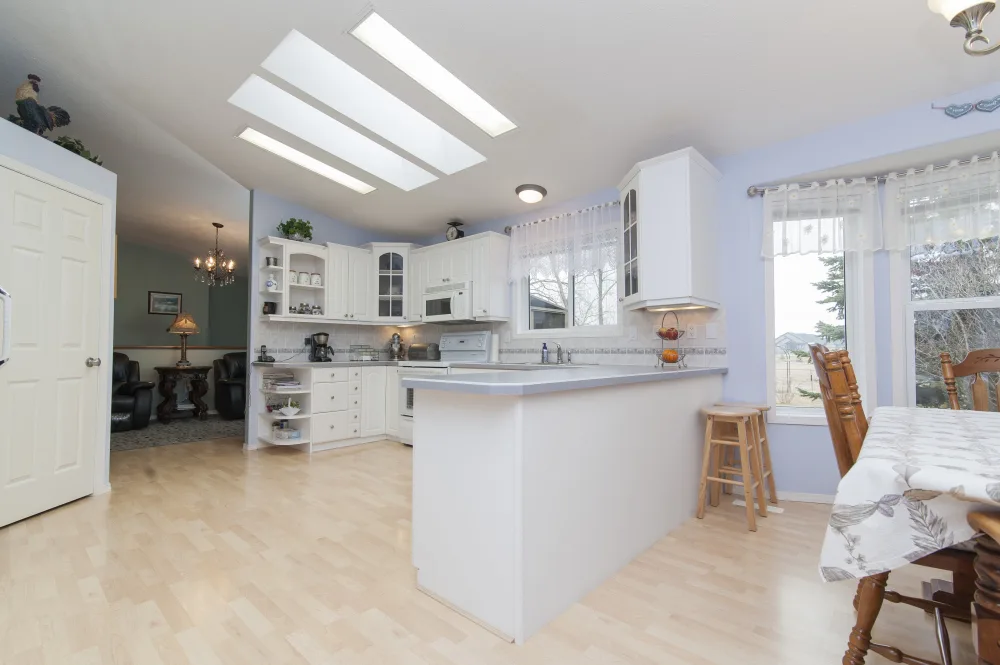
When homeowners look for the best tile for kitchen floor, they often choose tile for its longevity and low maintenance. Ceramic, porcelain, and stone tiles are all popular for modern kitchens.
Advantages of Tile Flooring
- Excellent Water & Stain Resistance: Especially with porcelain, which is dense and moisture-resistant.
- Design Versatility: Wide range of colors, patterns, and finishes for any kitchen style.
- Extreme Durability: Properly installed tiles can last for decades.
Considerations
- Cold & Hard Surface: May require area rugs or mats for comfort.
- Grout Maintenance: Needs periodic sealing and cleaning.
- Installation Cost: Higher compared to vinyl or laminate flooring.
Expert Tips for Tile Flooring
- Opt for non-slip kitchen tiles or textured finishes to prevent accidents.
- Choose porcelain for the best durability among kitchen floor tiles.
- Use larger tiles (e.g., 12”×24”) to minimize grout lines and achieve a clean look.
Vinyl Flooring — Best Waterproof Flooring for Kitchens
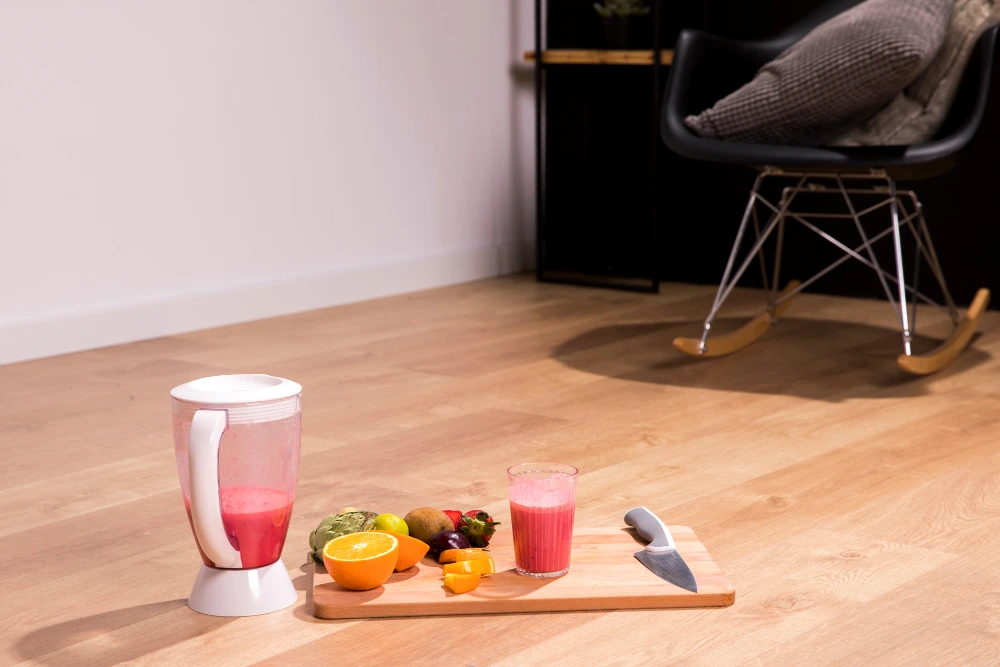
If practicality and waterproof performance are top priorities, vinyl is often considered the best waterproof flooring for kitchen spaces. Luxury vinyl plank (LVP) and luxury vinyl tile (LVT) offer impressive looks and durability.
Advantages of Vinyl Flooring
- 100% Waterproof: Perfect for moisture-prone areas like kitchens.
- Comfortable Underfoot: Softer and warmer than tile.
- Affordable & Easy to Install: Great for homeowners on a budget.
- Design Variety: Mimics stone, wood, or ceramic textures.
Considerations
- Resale Value: Tile or hardwood may appeal more to buyers.
- Quality Matters: Invest in a thicker wear layer for long-term use.
- Subfloor Prep: Smooth and level subfloor enhances durability.
For families or rental properties, the best vinyl flooring for kitchen areas will be waterproof and rated for high traffic.
Hardwood Flooring — Warmth, Luxury, and Natural Beauty
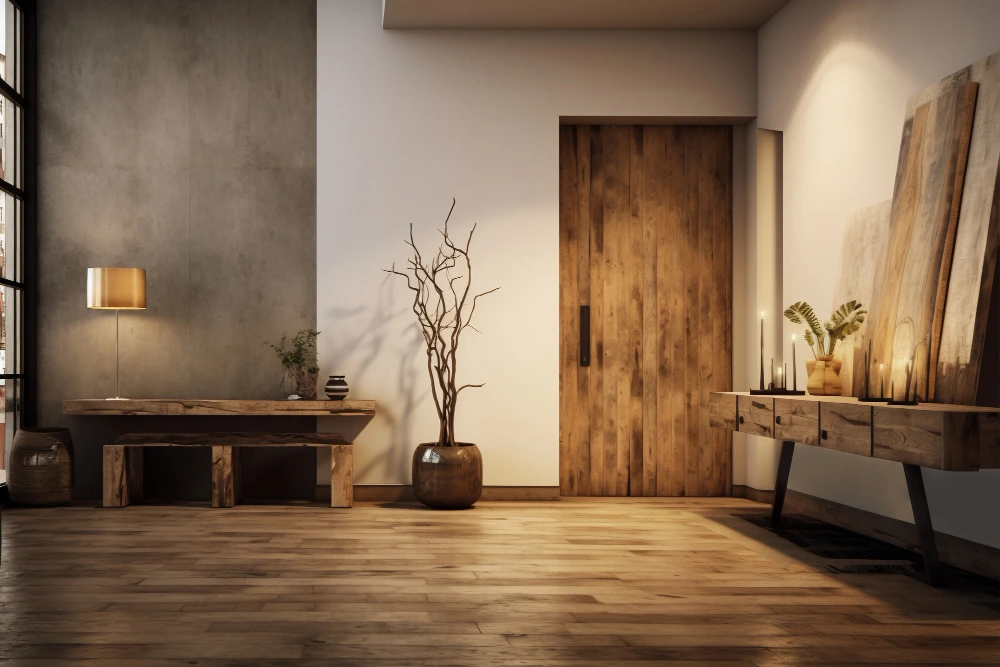
For timeless appeal, hardwood flooring remains a favorite. When properly installed and sealed, engineered hardwood is among the best hardwood floors for kitchen designs that blend warmth and elegance.
Advantages of Hardwood Flooring
- Elegant Natural Look: Adds warmth and sophistication.
- Can Be Refinished: Extends lifespan and keeps it looking new.
- Design Continuity: Ideal for open-concept homes.
Considerations
- Moisture Sensitivity: Requires careful sealing to avoid warping.
- Higher Maintenance: Needs prompt cleanup of spills.
- Cost: Typically higher material and installation costs.
For the best choice for kitchen flooring in high-end homes, opt for engineered hardwood with a strong finish and moisture barrier.
Kitchen Flooring Comparison Chart
| Flooring Type | Water Resistance | Durability | Maintenance | Cost | Ideal For |
|---|---|---|---|---|---|
| Tile (Porcelain/Ceramic) | Excellent | Very High | Low (with grout care) | Mid–High | Homeowners wanting long-term durability & design flexibility |
| Vinyl (LVP/LVT) | Excellent (Waterproof) | High | Very Low | Low–Mid | Busy families, rental homes, budget remodels |
| Hardwood / Engineered | Moderate (with seal) | High | Medium | High | Style-focused homes, resale upgrades |
Choosing Flooring Based on Lifestyle & Budget
- Families with kids or pets: Waterproof vinyl or tile works best.
- Frequent cooking & entertaining: Durable, easy-clean tile or high-grade vinyl.
- Open concept homes: Engineered hardwood provides a seamless flow.
- Budget remodels: Vinyl delivers great looks at a lower price.
- Preparing for resale: Tile or hardwood may enhance property value.
Expert Installation & Maintenance Tips
Subfloor & Preparation
- Ensure the subfloor is dry, level, and stable.
- Use moisture barriers where necessary, especially under hardwood or tile.
Installation Tips
- Tile: Use full-spread thin-set and properly sealed grout joints.
- Vinyl: Choose waterproof click-lock systems and seal edges tightly.
- Hardwood: Acclimate planks to your home’s humidity before installation.
Maintenance Tips
- Clean spills immediately to prevent stains or warping.
- Use mats near sinks and high-traffic zones.
- Tile: Reseal grout periodically.
- Vinyl: Use pH-neutral cleaners.
- Hardwood: Refinish as needed and maintain humidity balance.
FAQs About the Best Kitchen Flooring
Q1. What is the most durable kitchen flooring?
Porcelain tile and premium waterproof vinyl offer top-tier durability.
Q2. Is tile or vinyl better for kitchen floors?
Tile lasts longer and offers a premium finish; vinyl is budget-friendly and waterproof.
Q3. Can hardwood be used in kitchens?
Yes, especially engineered hardwood with proper sealing and care.
Q4. What are the best non-slip tiles for kitchens?
Matte or textured porcelain tiles rated for wet areas.
Q5. How do I choose the best material for kitchen floors?
Match your flooring to lifestyle, traffic, and maintenance preferences for long-term value.