
Posted on 07.29.2025
Sports flooring plays a critical role in both athletic performance and injury prevention. Whether it’s a school gym, a fitness studio, or a multipurpose athletic facility, the right flooring provides support, shock absorption, and durability for each type of sport. Sports flooring installers ensure that the chosen flooring is properly fitted for maximum safety and performance.
There are several different types of sports flooring, each built for specific performance needs. Common options include hardwood, rubber, vinyl, polyurethane, synthetic turf, and modular tile systems. These materials are chosen based on the sport being played, the space’s daily use, and the level of comfort and impact protection required.
6 Most Common Types of Sports Flooring
Here are some of the most common flooring types for sports facilities:
1. Hardwood Sports Flooring
Hardwood is one of the most traditional types of indoor sports flooring, often used in basketball courts and school gymnasiums. It offers excellent ball response, traction, and long-term performance. Most hardwood systems include a subfloor that allows some flexibility, which helps absorb impact and reduce injuries.
While hardwood requires regular maintenance and controlled humidity levels to avoid warping or cracking, it remains the gold standard for indoor courts thanks to its consistent performance and high-end appearance.
2. Rubber Sports Flooring
Rubber flooring is widely used in weight rooms, fitness centers, and functional training areas. It’s known for its shock absorption, slip resistance, and ability to handle heavy loads without damage. Rubber floors come in rolls, tiles, or mats and are easy to clean and maintain.
The cushioned surface helps protect joints during high-impact movements and shields subfloors from dropped weights or equipment. This type of flooring is ideal for high-use fitness environments and intense training areas.
3. Vinyl Sports Flooring
Vinyl sports flooring offers a versatile and cost-effective solution for multipurpose gyms and recreational areas. This type of flooring can replicate the look of wood while offering greater durability, moisture resistance, and ease of upkeep.
Vinyl floors are often used in school gyms, community centers, and indoor courts that host various activities. Built-in cushioning layers help absorb impact and reduce fatigue. They are also low-maintenance and resistant to scuffs, stains, and spills, making them an excellent choice for shared or high-traffic public spaces.
4. Polyurethane Sports Flooring
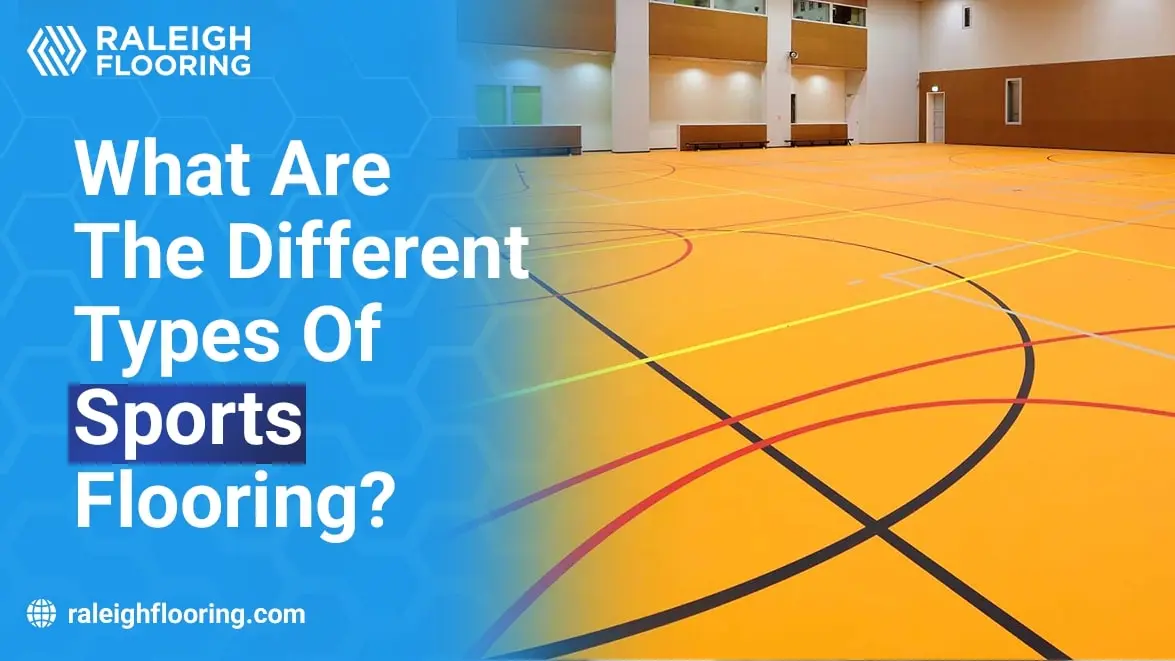
Polyurethane systems create a seamless, cushioned surface that’s often poured in place. This type of flooring is ideal for indoor sports halls that host a wide range of activities, including basketball, volleyball, and indoor soccer.
The surface is smooth and non-porous and available in different thicknesses to accommodate performance needs. It provides strong durability, easy cleaning, and long-term wear, making it a common choice for larger facilities with flexible settings.
5. Synthetic Turf
Synthetic turf is commonly used for outdoor fields, training areas, and even indoor practice spaces. It’s designed to mimic natural grass but with more durability and less maintenance. Turf systems often include shock pads underneath for added protection and performance.
This flooring is ideal for sports like football, soccer, and lacrosse, where traction and impact absorption are critical. It performs well in all weather conditions and offers reliable year-round use with minimal upkeep, making it especially useful for outdoor athletic programs.
6. Modular Tile Sports Flooring
Modular tiles are interlocking flooring systems made from durable plastic or rubber. They are often used in portable or temporary sports setups, like pop-up courts or events. These tiles are easy to install, remove, and store, making them perfect for spaces that serve multiple purposes.
While modular tiles may not match the advanced performance of hardwood or polyurethane systems, they still offer reliable traction and versatility for a wide range of sports and recreational activities.
Conclusion
Sports flooring comes in many forms, each designed for a specific set of needs. Hardwood is perfect for indoor courts where performance and ball bounce matter. Rubber excels in weight rooms and fitness areas due to its shock absorption and durability. Vinyl is a smart option for multipurpose indoor spaces that need resilience and low maintenance.
For large athletic centers, polyurethane provides seamless cushioning and flexibility. Synthetic turf works well for field sports and outdoor use, while modular tiles are great for temporary courts and versatile facilities. Raleigh Flooring installs all major types of sports flooring with the right balance of safety, performance, and long-term value.