
Posted on 07.10.2025
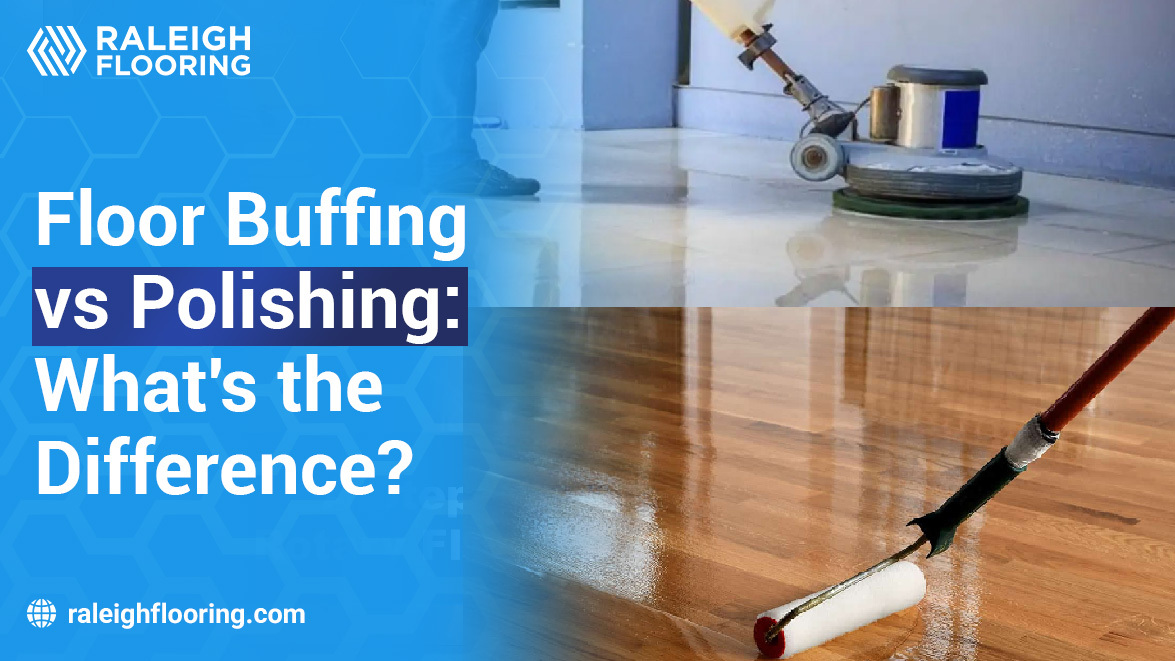
Ensuring that your flooring is well-maintained in appearance and durability is essential. Two common floor maintenance methods are floor buffing and polishing. While they may sound similar, it’s important to understand their key differences.
Floor buffing is a light restoration method that uses fine abrasives or gentle cleaning solutions to smooth surfaces. It works best for preserving vinyl, linoleum, and tiles. In contrast, polishing removes a thin surface layer using fine abrasives, creating a high-gloss, mirror-like finish on stone, hardwood, or concrete.
What Is Floor Buffing?
Floor buffing is a surface cleaning and maintenance method that uses a buffer machine to restore shine. It’s typically used on flooring that has become dull over time. Buffing restores the surface and a clean appearance by redistributing existing wax or polish. There are two types of buffing:
- Spray Buffing: A light solution mist is sprayed, and the buffer enhances the shine.
- Dry Buffing: It is a procedure that involves a high-speed buffer, so no solution is needed.
The buffing process is normally used for vinyl, linoleum, and tile floors.
What Is Floor Polishing?
Floor polishing is a more intensive technique that removes a thin layer of the floor’s surface using abrasives or polishing compounds. The goal is to eliminate minor scratches, stains, and scuff marks while achieving a mirror-like shine.
Polishing is often done using fine-grit abrasives to grind down the floor lightly. It is commonly applied to durable surfaces such as marble, granite, hardwood, and concrete.
Know the Differences Between Floor Buffing and Polishing
Even though both improvements have the same intention, they have numerous differences.
Objectives and Goals
- Buffing is performed to remove dirt, restore, and improve the floor without removing material. It renews shine and fixes light damage.
- Polishing is applied to remove more coarse wear and scratches and produces a shiny finish.
Surface Appearance
- After buffing, floors appear refreshed, cleaner, and subtly glossy.
- Polishing produces a deep, wet-look shine that’s reflective and harder to achieve without machine precision.
Abrasive Grain Size and Texture
- Buffing utilizes fine abrasive pads and spray compounds.
- Polishing uses fine materials or pads to remove tiny surface imperfections and make floors shiny.
Tools and Polishing/Buffing Compounds
- Buffing: Buffing typically uses a machine operating at 175–1,200 RPM, soft pads, and light spray solutions.
- Polishing: Polishing requires a high-speed burnisher, firmer pads, and sometimes powdered compounds or polishing slurry.
Application Process
Buffing Process
- Thoroughly clean the floor—sweep, vacuum, mop.
- Lightly mist with buff solution.
- Operate the machine in sections of approximately 3×3 ft to ensure even coverage.
- Polishing is often performed after buffing to maximize shine.
Polishing Process
- Clean the floor thoroughly.
- Use a burnisher at high RPM with pads or polishing powder.
- Work systematically to ensure even gloss and surface leveling.
- Often done following buffing for maximum effect.
Typical Uses and Contexts
- Buffing is commonly utilized in commercial settings, retail spaces, or residential floors for routine preservation.
- Polishing is right for high-end finishes, showrooms, or areas where a premium, glossy appearance is desired. It is regularly performed during upkeep or restoration.
Level of Material Removal
- Buffing doesn’t remove much material—it simply redistributes existing wax or finish to refresh the look.
- Polishing removes a fine surface layer to eliminate scratches and dullness, revealing a smooth, high-gloss finish.
Maintenance and Longevity
- You can buff more regularly, including monthly or weekly, which helps maintain the finish longer.
- Polishing helps maintain a high-end shine but causes more wear to pads due to its abrasive nature.
Material Compatibility and Suitability
- Buffing is suitable for vinyl, linoleum, and tile.
- Polishing is not recommended for softer materials like vinyl, LVT, or laminate, as it may cause damage.
Time Investment and Cost Considerations
- Buffing is faster and requires less equipment, making it suitable for professional or DIY servicing.
- Polishing involves high-speed machines and often needs a trained operator, which increases the cost.
How to Choose Between Floor Buffing and Polishing
Choosing the proper approach depends on some simple factors:
- Check the Floor’s Current Condition: Check whether your floor is dull, scratched (buffing), heavily stained, or damaged (polishing). Routine wear and tear typically calls for buffing, whereas restorative work leans toward polishing.
- Know What Results You Want: Decide what you want, whether it be a clean and refreshed look (buffing) or deep material removal to produce a high-gloss surface (polishing).
- Look at the Level of Floor Damage: Minor scratches and dullness can often be addressed with buffing, but deeper scratches, stains, or surface damage may require polishing or restorative treatments.
Pros and Cons of Each Method
Buffing Pros
- Quick and affordable
- Easy for regular maintenance
- Less abrasive
Buffing Cons
- Temporary results
- Doesn’t fix deep damage
Polishing Pros
- Long-lasting shine
- Removes imperfections
- Suitable for high-end flooring
Polishing Cons
- Costly and time-consuming
- Requires more skill and specialized equipment
Conclusion
Floor buffing and polishing serve distinct purposes in floor maintenance. Buffing is suitable for regular maintenance, restoring shine quickly on vinyl, linoleum, and tile surfaces. On the other hand, polishing provides an even, longer-lasting, high-gloss finish, which is also suitable for high-gloss materials (such as stone and hardwood) but is more equipment- and skill-intensive.
Choosing the proper technique depends on your floor’s situation and preferred effects. Regular buffing can keep floors sparkling, while polishing is better for addressing deeper scratches and attaining a premium look. Consulting professional like Raleigh Flooring can help determine the best technique for your unique flooring.