
Posted on 05.22.2026
You spilled water on your floor and now you are wondering if it’s ruined. With vinyl, probably not. It handles moisture better than hardwood and will not swell from everyday splashes. But waterproof isn’t a free pass because water can still cause damage under the wrong conditions. This guide covers is vinyl flooring waterproof?, what makes vinyl waterproof, where it performs best and how to protect it long term.
Core Takeaways
- Vinyl flooring is waterproof at the surface but not immune to water underneath
- The wear layer and sealed surface work together to resist moisture
- Kitchens, bathrooms and basements are ideal spaces for vinyl
- Poor installation and subfloor moisture are the two biggest risks
- Sheet vinyl beats plank formats in moisture resistance due to fewer seams
Is Vinyl Flooring Really Waterproof?
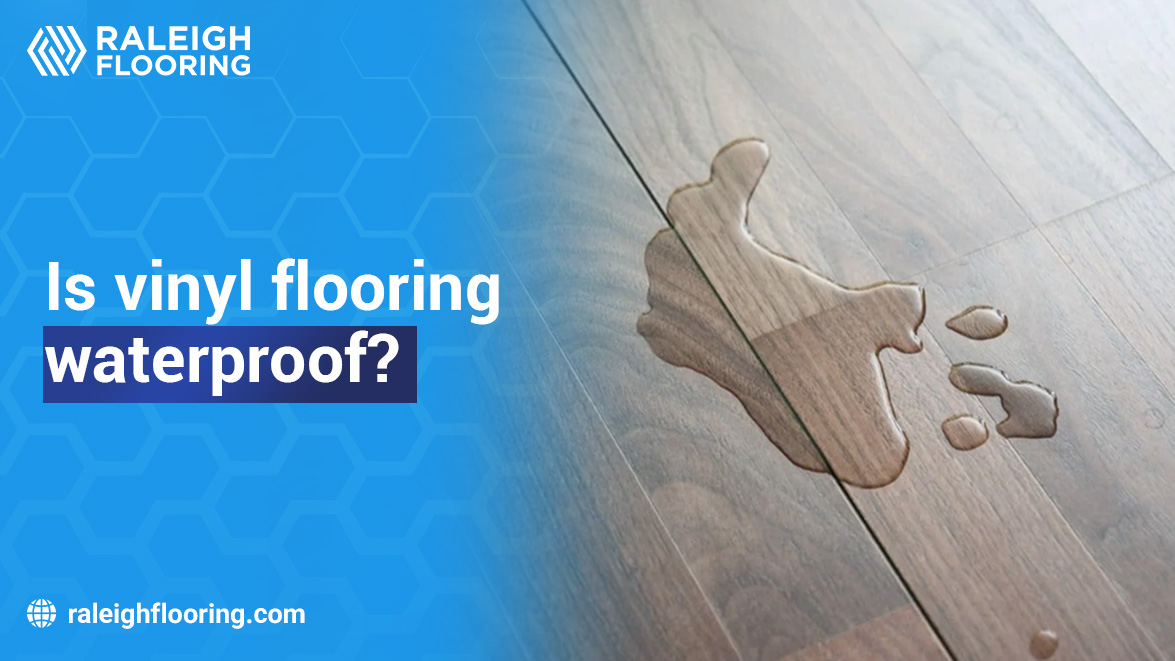
Yes, but with limits which are worth knowing. Vinyl flooring won’t absorb surface moisture the way hardwood or laminate does. Spills, splashes and wet shoes are no problem at all. The planks or sheets are made from PVC-based materials that water simply cannot penetrate.
The catch is what happens below the surface. If water finds a gap at the edges, it flows beneath and becomes trapped. That trapped moisture damages the subfloor and adhesive layer over time. So the flooring itself is waterproof but the full installation may not be.
What Makes Vinyl Flooring Waterproof?
Vinyl doesn’t rely on one thing to keep water out. A few layers work together to protect the floor.
Protective Wear Layer
The wear layer is on the top of the floor. It blocks water stains and scratches from getting through to the core. Thicker wear layers last longer in busy rooms. A 12 mil layer works fine for most homes and 20 mil is better for commercial spaces.
Water Resistant Core Materials
The core layer is under the wear layer. This is where vinyl really proves itself against water. WPC and SPC cores will not swell, warp or buckle when water hits them. They handle long-term moisture better than standard vinyl cores.
Sealed Surface Construction
The surface of vinyl flooring comes sealed from the factory. That seal stops water from getting into any tiny gaps in the material. It also makes cleaning easier because liquids sit on top instead of soaking into the floor. Heavy foot traffic can wear this seal down so cleaning and upkeep do matter.
Resistance to Everyday Moisture and Spills
Vinyl handles daily moisture without problem. Even dog bowls, shower splashes, cooking spills and steamy air do not bother it. That’s why so many people use it in kitchens and bathrooms.
Where Waterproof Vinyl Flooring Works Best
Vinyl works really well in rooms where other floors struggle with water. Each space below shows exactly where vinyl shines the most.
Kitchens and Dining Areas
Kitchen spills are hard on floors because grease splashes, dropped drinks and footsteps put a lot of stress. Vinyl handles all of that without staining and also feels comfortable to stand on during long cooking sessions.
Bathrooms and Laundry Rooms
Bathrooms are also the best place to use waterproof vinyl. Steam and daily humidity are all normal in a bathroom and vinyl handles it properly. Even laundry rooms have similar risks and vinyl holds up well where carpet would get ruined and tile would feel too cold.
Basements and Utility Spaces
Basements deal with ground moisture daily. Vinyl handles that better than most other floor types. It does not need a perfectly dry subfloor the way hardwood does. Vinyl is a great pick for utility spaces where you need something tough as well as easy to clean.
Commercial and High Moisture Areas
Restaurants, gyms and clinics deal with heavy foot traffic and get mopped down every single day. Thick commercial-grade vinyl is made for exactly that kind of use. It stays clean and looks good that is why so many businesses use it.
What Can Damage Waterproof Vinyl Flooring?
Vinyl is tough but it does have weak points. A few situations can cause real damage if you are not careful.
Water Seeping Beneath the Flooring
This is the most common problem for people. Water gets under the planks through gaps near, and once it gets under there, it has nowhere to go. It sits against the subfloor and slowly causes mold rot and glue failure.
Poor Installation and Open Seams
A bad installation job creates gaps that help water get into right away. Planks that are not clicked together properly or sheet vinyl with weak seam sealing will both let water through. It does not matter how good the product is because a poor installation will cause problems fast.
Long-Term Flooding Exposure
Vinyl can handle a spill but leaving it in deep water for hours can cause major problems. If it happens, vinyl should always be checked and often needs to be replaced even if it looks okay on top.
Moisture Trapped in the Subfloor
A damp subfloor traps moisture under the vinyl from the very first day. That moisture slowly breaks down both the subfloor and the flooring sitting on top of it. Always check subfloor moisture before you install vinyl in any room.
Tips to Keep Vinyl Flooring Waterproof
Vinyl care is not too difficult but a small number of habits ensure that it will last significantly longer.
- Apply a waterproof caulk around the wall and door edges to seal it correctly.
- Place mats around sinks, dishwashers and washing machines to prevent the mess or water from spreading.
- Inspect seams annually, and watch for any spaces between planks.
- Avoid using a steam mop, as it can damage surface seals and seams.
- Patches the leaks quickly because a single drip can cause more damage than a large spill over time.
Waterproof Vinyl Flooring vs Water-Resistant Flooring
These are two terms that are pronounced the same but have different meanings.
Waterproof flooring is one that doesn’t let water pass through the material no matter how long it is left in place. This includes vinyl and tile.
If you clean a spill quickly, water-resistant flooring will be able to withstand it. However, if left on for too long, it will begin to swell and warp. A good example of this is laminate.
Conclusion
Vinyl flooring is one of the best options for any space that is exposed to water frequently. Resists spills, steam and humidity better than other flooring options. Keep in mind that water may still seep under the floor if not installed properly. So if you have been wondering, is vinyl flooring waterproof?, the answer is yes, as long as it goes down right and you take care of it over time. If you are planning a flooring upgrade, contact Raleigh Flooring for expert guidance and professional installation tailored to your space.
Frequently Asked Questions
Can water damage vinyl flooring?
Water pooling on top of vinyl will not cause harm. The trouble occurs when water gets underneath the ground through cracks or free seams. When it gets to the subfloor area, it can bring edge rot and damage which is expensive to fix.
Is a luxury vinyl plank completely waterproof?
Luxury vinyl plank is waterproof from the inside out. It won’t swell or be warped from moisture on top. However, seams and edges must still be sealed properly; water can sneak underneath and cause problems over time.
Is sheet vinyl more waterproof than vinyl planks?
Yes in most cases. Sheet vinyl covers the floor in large pieces with very few seams. Fewer seams means fewer spots where water can get in. Vinyl planks have more joints between them which gives water more chances to work its way under the floor.