
Posted on 09.07.2025
Finding the perfect flooring for your home when you have dogs can be a tricky balance. On one hand, you want floors that are stylish and match your home’s interior. On the other, you need materials that can withstand claws, accidental spills, and heavy foot (or paw) traffic. Selecting the right flooring is not just about looks—it’s about durability, comfort, and ease of maintenance.
At Raleigh Flooring, we’ve helped countless homeowners in North Carolina choose pet-friendly, waterproof, and scratch-resistant flooring that looks amazing and lasts for years. In this guide, we’ll explore the best flooring for dogs, including options that are safe, comfortable, and easy to clean, so both you and your furry friends can enjoy a happy home.
What Makes Flooring Dog-Friendly?
When selecting flooring for homes with dogs, there are several factors that determine whether a floor is truly pet-friendly:
1. Durability
Dogs can be tough on floors. Their claws can scratch surfaces, and active play can wear down less sturdy materials. Floors like vinyl, tile, and rubber are highly durable and can handle even large or energetic dogs.
2. Water & Stain Resistance
Accidents happen, whether it’s a puppy learning the ropes or an older dog with occasional leaks. Choosing waterproof or urine-resistant flooring such as vinyl, tile, or epoxy will protect your investment and reduce the risk of stains, mold, or mildew.
3. Comfort & Safety
Slippery floors can lead to injuries for dogs. Floors with non-slip textures or softer materials like rubber, cork, or padded vinyl help keep pets safe while providing comfort under their paws.
4. Easy Cleaning & Maintenance
Pet hair, dirt, and spills are inevitable. Smooth surfaces and modular flooring options make cleaning simple and help maintain a hygienic space for your pets. Materials with anti-microbial or stain-resistant finishes are ideal for pet owners.
Top Types of Flooring for Dogs (Pros & Cons)
Every flooring material has strengths and weaknesses. Here’s a comprehensive guide to the best options for your home:
Vinyl Flooring for Dogs
Vinyl flooring is one of the most popular choices for pet owners, and for good reason.
Pros:
- Highly durable and scratch-resistant
- Waterproof and easy to clean
- Comfortable underfoot for pets
- Affordable and available in many designs, including wood or stone looks
Cons:
- Can be slippery when wet
- Thin layers may dent under heavy furniture
Best For: Active dogs, high-traffic areas, and owners looking for a budget-friendly option.
Tile Flooring for Dogs
Tile, especially porcelain tile, is extremely hard-wearing and easy to maintain.
Pros:
- Water and stain resistant
- Highly durable, long-lasting
- Cool surface that can feel refreshing for pets
- Low maintenance
Cons:
- Hard surface can be tough on older dogs’ joints
- Slippery if not textured
- Can be cold in winter
Best For: Homes in warmer climates or areas prone to messes (like kitchens or mudrooms).
Laminate Flooring for Dogs
Laminate flooring offers the look of wood without many of the drawbacks.
Pros:
- Scratch and stain resistant
- Cost-effective
- Easy to clean
- Some waterproof laminates are available
Cons:
- Susceptible to water damage if spills are not cleaned promptly
- Can be slippery
Best For: Homeowners who want a wood-like appearance without sacrificing durability.
Hardwood Flooring for Dogs
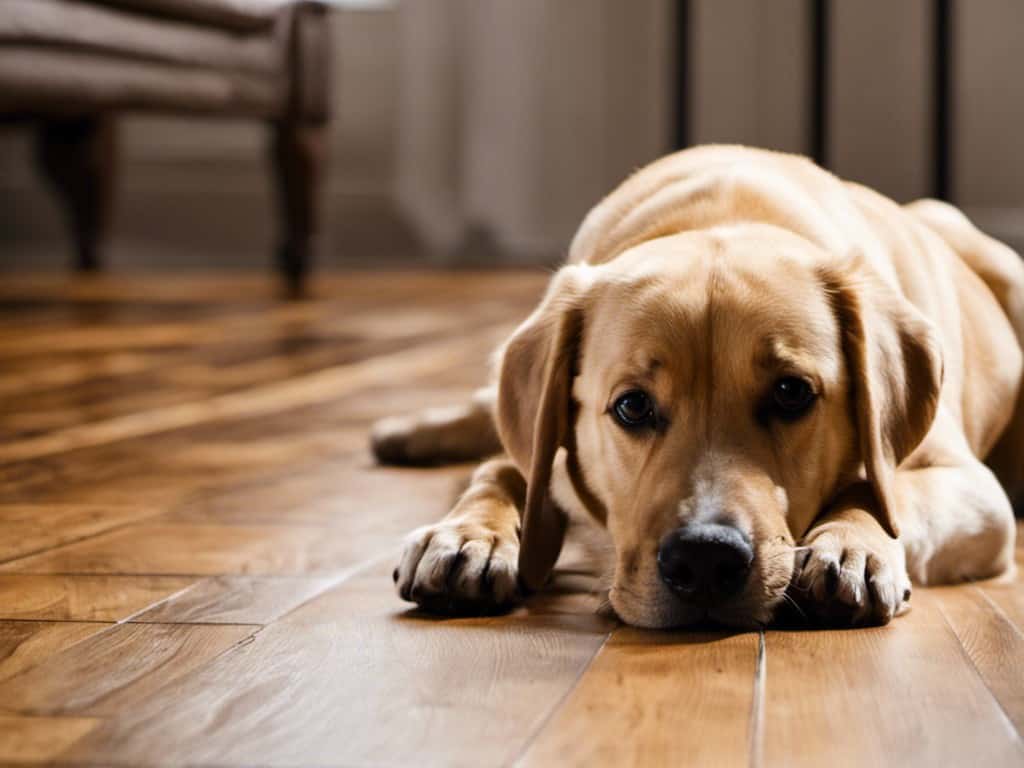
Hardwood floors are timeless, elegant, and can add value to your home. They blend seamlessly with interior design and offer a warm, natural look. However, pet owners need to consider the challenges.
Pros:
- Classic, beautiful appearance
- Lasts many years with proper care
- Can be refinished if scratched
Cons:
- Susceptible to scratches from claws
- Not fully waterproof; spills and accidents can cause stains
- Requires regular maintenance
Best For: Homeowners willing to protect floors with rugs or mats and regularly maintain them.
Tip: Engineered hardwood can offer better moisture resistance than solid wood while still maintaining a natural look.
Bamboo Flooring for Dogs
Bamboo is an eco-friendly alternative that is also surprisingly durable. Certain types, like strand-woven bamboo, resist scratches and dents better than traditional hardwood.
Pros:
- Strong and eco-friendly
- Can resist minor scratches and stains
- Stylish, modern look
Cons:
- Sensitive to moisture in some types
- Quality varies depending on manufacturer
- Can be more expensive than vinyl or laminate
Best For: Homeowners seeking sustainable, pet-friendly flooring with a unique aesthetic.
Cork Flooring for Pets
Cork offers a soft, cushioned surface that is gentle on dogs’ joints and paws. It naturally absorbs sound and provides a warm feel.
Pros:
- Comfortable and soft underfoot
- Naturally antimicrobial
- Mold and mildew resistant
- Eco-friendly
Cons:
- Can show scratches over time
- May discolor with sunlight
- Requires sealing to protect against moisture
Best For: Dogs with joint issues or homes needing quiet, soft flooring.
Rubber Flooring for Dogs
Rubber flooring is durable, easy to clean, and highly resistant to water and urine, making it perfect for indoor dog areas or kennels.
Pros:
- Comfortable and non-slip
- Waterproof and easy to clean
- Highly resilient
Cons:
- Can be damaged by heavy chewing or scratching
- Limited aesthetic options compared to wood or tile
Best For: Kennels, indoor dog play areas, or homes with multiple dogs.
Epoxy Flooring for Dog Kennels
Epoxy floors are commonly used in professional kennels due to their durability and resistance to accidents. While labor-intensive to install, they are ideal for areas that see heavy traffic.
Pros:
- Waterproof and fire-resistant
- Shock and stain-resistant
- Extremely durable
Cons:
- Difficult and expensive to install in homes
- Can be hard underfoot for pets
Best For: Dedicated pet rooms, kennels, or high-traffic dog areas.
Artificial Grass Flooring for Dogs
Artificial grass can create a comfortable, realistic outdoor feel inside your home or a dog room.
Pros:
- Soft and comfortable
- Easy to clean and maintain
- Visually appealing
Cons:
- Longevity can be less than tile or vinyl
- May trap dirt or odors if not cleaned regularly
Best For: Indoor dog areas or small kennels where a “natural feel” is desired.
Flooring for Dogs (Waterproof & Urine-Resistant Options)
For homes with puppies or senior dogs, waterproof and urine-resistant floors are essential.
Top Picks:
- Vinyl and LVP (Luxury Vinyl Plank)
- Porcelain or ceramic tile
- Rubber flooring
- Epoxy floors
Tips:
- Choose smooth surfaces without grooves
- Avoid soft materials that absorb liquids
- Consider modular flooring for easy replacement
Non-Slip & Comfortable Flooring for Dogs
Safety matters! Avoid slippery surfaces that can injure your pets.
Best Options:
- Rubber and cork flooring
- Textured vinyl or LVP
- Rugs or mats in high-traffic areas
Flooring Tips for Large or Active Dogs
Large or energetic dogs need scratch-resistant and durable floors:
- Opt for vinyl, tile, or epoxy
- Avoid softwoods or untreated hardwood
- Add protective mats in areas where they eat or play
Flooring for Dog Kennels or Pet Rooms
Modular flooring is ideal for dog-specific areas:
- Can cover non-standard spaces easily
- Easy to clean and replace
- Helps maintain hygiene
Comparison Table: Flooring Types for Dogs
| Flooring Type | Durability | Water Resistance | Comfort | Maintenance | Best For |
|---|---|---|---|---|---|
| Vinyl / LVP | High | Excellent | Medium | Easy | Active dogs, kitchens |
| Tile | Very High | Excellent | Low | Easy | Mudrooms, high traffic |
| Laminate | Medium | Medium | Low | Moderate | Wood-look desire, budget |
| Hardwood | Medium | Low | Medium | High | Stylish homes, smaller dogs |
| Bamboo | Medium-High | Medium | Medium | Moderate | Eco-friendly, pets |
| Cork | Medium | Medium | High | Moderate | Older dogs, quiet rooms |
| Rubber | High | Excellent | High | Easy | Kennels, indoor play areas |
| Epoxy | Very High | Excellent | Low | Moderate | Kennels, high-traffic areas |
| Artificial Grass | Medium | Medium | High | Moderate | Indoor natural feel |
FAQs About Pet-Friendly Flooring
-
What is the most durable flooring for dogs?
Tile, epoxy, and vinyl are top choices for long-lasting durability.
-
What flooring is best for dogs that pee?
Waterproof vinyl, tile, rubber, or epoxy floors prevent stains and odors.
-
Is vinyl or laminate better for dogs?
Vinyl is generally more waterproof and scratch-resistant, while laminate is more budget-friendly but less water-tolerant.
-
What’s the best non-slip flooring for pets?
Rubber, cork, or textured vinyl provides traction and safety for pets.
-
Can dogs scratch hardwood floors?
Yes, hardwood is prone to scratches; consider engineered hardwood or protective mats.
-
What is the best flooring for large dogs?
Durable materials like vinyl, tile, and rubber withstand heavy traffic.
-
What’s the easiest flooring to clean with pets?
Smooth, waterproof surfaces such as vinyl, tile, and epoxy are easiest.
-
What’s the cheapest pet-friendly flooring option?
Laminate and vinyl flooring provide budget-friendly, durable solutions.
Final Thoughts:
Choosing the right flooring for your dog is about balance. You want something durable, easy to clean, comfortable, and stylish. At Raleigh Flooring, we help homeowners in North Carolina find floors that meet every requirement. whether it’s for a busy kitchen, a dog room, or a living area.